
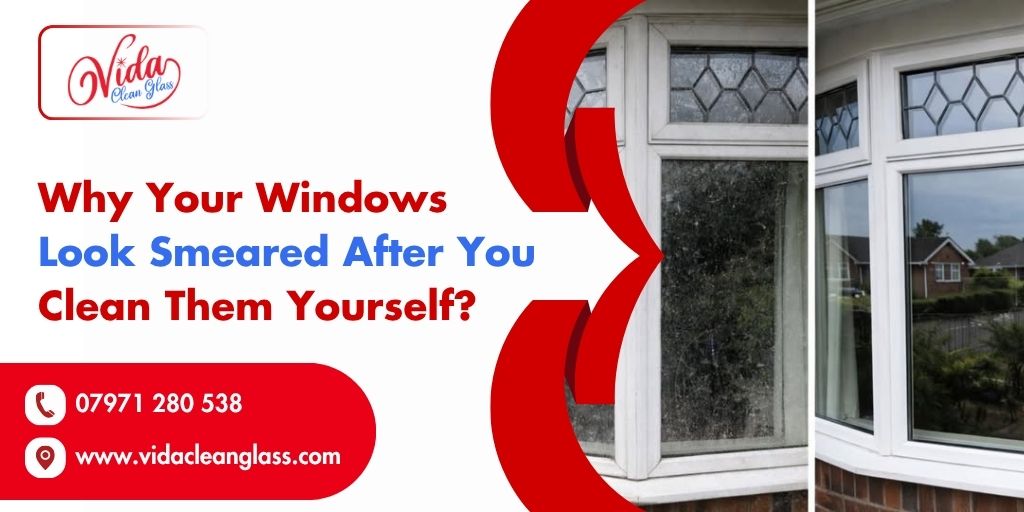
You spent 40 minutes, a full roll of paper towels, and half a bottle of spray, and somehow your windows look worse than before. You’re not alone. Here’s the real story.
Let’s be straight with you, cleaning your own windows is one of those jobs that looks straightforward right up until you’ve done it. You’ve got your spray bottle, your cloth, maybe a squeegee you grabbed from a supermarket. You go at it with full confidence. Then the sun comes out, hits the glass at an angle, and there it is: every single stroke you made is perfectly preserved in a shimmering trail of smears.
It’s genuinely maddening. And the frustrating part? It’s not your fault you weren’t told why it keeps happening. This blog breaks down the real reasons behind DIY window smearing, problems that tradespeople like us see every single week across homes and businesses, and what actually works instead.
The Moment You Realise Something Has Gone Wrong
It usually happens in the afternoon. The morning light wasn’t quite showing it, but now the sun is lower and coming through at that punishing angle, revealing everything. You can see every wipe, every swirl, and in some cases, the smears are actually worse than the dust that was there before.
Sound familiar? We hear this almost daily from new customers who’ve been through this loop, clean, smear, wipe again, smear more, give up, before finally calling in a professional. But understanding why it happens is genuinely useful, whether you end up tackling it yourself or handing it over to someone who does this for a living.
Reason 1: You’re Using the Wrong Cleaning Solution
This is probably the single biggest culprit, and almost nobody talks about it. Most supermarket window sprays are designed to smell good, look impressive in the bottle, and sell. What many of them aren’t optimised for is leaving glass genuinely residue-free because many contain soap agents, alcohol, or ammonia compounds that, once dry, leave a thin film behind. That film is invisible until the light hits it at the right angle.
When the soapy or ammonia-based cleaning solution evaporates, it doesn’t fully disappear. It leaves trace surfactant residue on the glass surface. Every wipe redistributes that residue rather than removing it. The more you wipe, the more uniform and therefore more visible the smear becomes.
The best solution for cleaning windows, used by professional window cleaners, is actually far simpler than most people expect: pure water — specifically deionised or purified water leaves absolutely zero mineral deposit or residue when it dries. That’s why water-fed pole systems used by professionals deliver streak-free results every time, without the need for cleaning chemicals.
Reason 2: Your Cloth or Paper Towels Are the Problem
Paper towels are the most common DIY window cleaning tool. They are also one of the worst possible choices for glass. Paper towels are made of fibres that break down when they come into contact with moisture. They shed microscopic lint onto your glass as you wipe, and they redistribute the cleaning solution rather than absorb it. The result is a smeared, slightly fuzzy surface that catches light beautifully in the worst way.
Old newspaper, a classic home remedy, works slightly better due to its texture and ink compounds, but it, too, leaves residue and is messy to handle. Microfibre cloths are genuinely better for dry buffing. Still, if they’re not perfectly clean, if they have any grease or detergent residue from their last wash, they transfer that contamination directly to your glass.
Reason 3: Tap Water Is Working Against You
London tap water is notoriously hard. It has one of the highest mineral content levels of any city water supply in the UK, rich in calcium and magnesium carbonates. Every time you use tap water to clean your windows and then let them dry, those minerals leave behind a white, chalky deposit. Over time, especially after repeated DIY attempts, this mineral layer builds up and forms a haze that appears to be permanent on your glass.
If you’ve ever noticed that your windows seem to look worse in winter after rain, that’s partly this. London rainwater, as it falls through the atmosphere and runs off roof surfaces, picks up pollutants and particles that deposit on glass surfaces.
“After every rain shower, our windows would have these white streaky lines running down. We thought the glass was somehow damaged. Turned out it was just mineral deposits from years of hard water, a proper clean sorted it out completely.”
Reason 4: You’re Cleaning in Direct Sunlight
This one surprises most people. Cleaning windows on a bright, sunny day feels logical; you can see what you’re doing. But direct sunlight is actually your enemy when cleaning glass. The heat causes your cleaning solution to evaporate almost immediately, before you have a chance to wipe it away properly. What’s left behind is the dried residue of whatever was in your spray, concentrated, patchy, and highly visible once the sun hits it at a lower angle later in the day.
Professional window cleaners aim to work in overcast conditions or on the shaded side of a building for exactly this reason. It’s a small thing that makes an enormous difference to the result.
What Actually Works: The Professional Difference
Experts don’t use magic. They consistently use the right water, the right tools, and the right technique. The purified water fed through a water-fed pole system has had all minerals removed through reverse osmosis and deionisation. When it dries on glass, there is literally nothing left to form a deposit. The result is genuinely streak-free glass, every time, regardless of weather.
What Does a Professional Clean Actually Do Differently?
- Uses purified, deionised water with zero mineral content
- Water-fed pole systems reach upper floors without ladders or streaky rags
- Proper technique removes London pollution, bird dropping residue, and traffic film
- No cleaning chemicals means no surfactant residue left on the glass
- Regular scheduling prevents hard mineral build-up from accumulating
- Frames, sills, and reveals cleaned at the same time, not just the glass
So — Should You Ever Clean Your Own Windows?
Honestly? For a quick inside wipe with a proper microfibre cloth to remove dust or fingerprints, yes, absolutely. For a full external clean, especially on anything above ground floor, or any commercial property, or anywhere that hard water deposits have been building for more than a few months? The result will almost always be disappointing, and the risk of accidentally scratching glass with grit caught in a cloth is real and expensive.
The most common thing we hear from first-time customers is: “I wish I’d just called you three months ago.” The cost of a professional clean is almost always far less than people expect. The result, compared to an hour of frustrating DIY smearing, is not even comparable.
Stop Fighting Your Windows. Let Vida Clean Glass Handle It!
Vida Clean Glass is Westminster and Central London’s trusted professional window cleaning service for homes, flats, offices, and commercial premises of every size. We use purified water systems, arrive exactly when we say we will, and we don’t leave until the glass is genuinely clear. No smears. No residue. No excuses.
Whether you need a one-off deep clean to reset years of build-up, or a regular schedule to keep your property looking its best year-round, our team is ready. Get a no-obligation quote back within 24 hours — it costs you nothing to ask.
Frequently Asked Questions
Q1. Why do my windows look worse after I clean them?
Almost always, it comes down to three things working against you at the same time: a cleaning product that leaves surfactant residue when it dries, tap water with high mineral content (particularly hard in London), and a cloth or paper towel that redistributes moisture rather than fully removing it. When the sun hits the glass at a low angle, all of that becomes visible as streaks and smears. The fix is purified water, a genuinely clean lint-free cloth, or just calling a professional who uses the right tools from the start.
Q2. What is the best way to clean windows without streaks?
Counterintuitively, the best solution is often no solution at all, just purified, deionised water. This is what professional window cleaners use in water-fed pole systems, and it leaves zero mineral deposit or residue when it dries.
Q3. How often should windows be cleaned in London?
For residential properties in Central London, including Westminster, Pimlico, and surrounding areas, the typical recommendation is every 6 to 8 weeks. Traffic pollution, exhaust particulates, and frequent rainfall all deposit grime on glass faster than in suburban or rural areas. Lower-floor windows in high-traffic areas get dirtier than those on higher floors. For commercial premises, especially shopfronts and restaurants, fortnightly or monthly cleans are common to maintain a consistently presentable appearance.
Q4. Can hard-water stains on windows be permanently removed?
Yes, but it requires the right approach. Light hard water deposits respond well to a diluted white vinegar solution or specialist lime-scale remover applied carefully, followed by thorough rinsing with purified water. Heavier, long-standing mineral build-up may require a professional-grade glass restoration treatment using fine abrasive compounds. Once removed, maintaining a regular professional cleaning schedule using purified water prevents re-accumulation.
Q5. Why does rain make my windows look dirty straight after they’ve been cleaned?
This is one of the most common questions we get. Rain itself isn’t the problem — clean rain on properly cleaned glass actually rinses away surface dust harmlessly and dries clear when purified water was used in the original clean. What makes windows look dirty after rain is usually one of two things: either the previous cleaning left a residue that rain is now spreading across the glass, or the rainwater is picking up pollution and particulates from the air and roof surfaces as it runs down the glass. Regular cleaning prevents that layer from building up in the first place.