Pure water window cleaning uses specially filtered water, stripped of all minerals and impurities, to clean glass without any chemicals. A soft brush on an extendable pole loosens the dirt, the purified water rinses it away, and the glass is left to dry on its own with no streaks, spots, or residue. It is safer, greener, and longer-lasting than the old bucket-and-squeegee method, which is exactly why most professional window cleaners across the UK have switched to it.
If your windows look smeared a week after a clean, or you have given up trying to reach the upper floors safely, this guide explains why the method matters and how it gets results that ordinary cleaning simply cannot match.
What is Pure Water Window Cleaning?
Pure water window cleaning, often called the “reach and wash” method, is a system that turns ordinary tap water into a powerful, chemical-free cleaning agent. Tap water is full of dissolved minerals, salts, and chlorine. When it dries on glass, those minerals are left behind as the spots and streaks you know too well.
The purified version removes all of that. Water is forced through a multi-stage filter, leaving it with almost zero dissolved solids. In this state, the water becomes “hungry” and naturally pulls dirt off the surface. Because there is nothing left in it, it dries completely clear.
How Does Pure Water Window Cleaning Work?
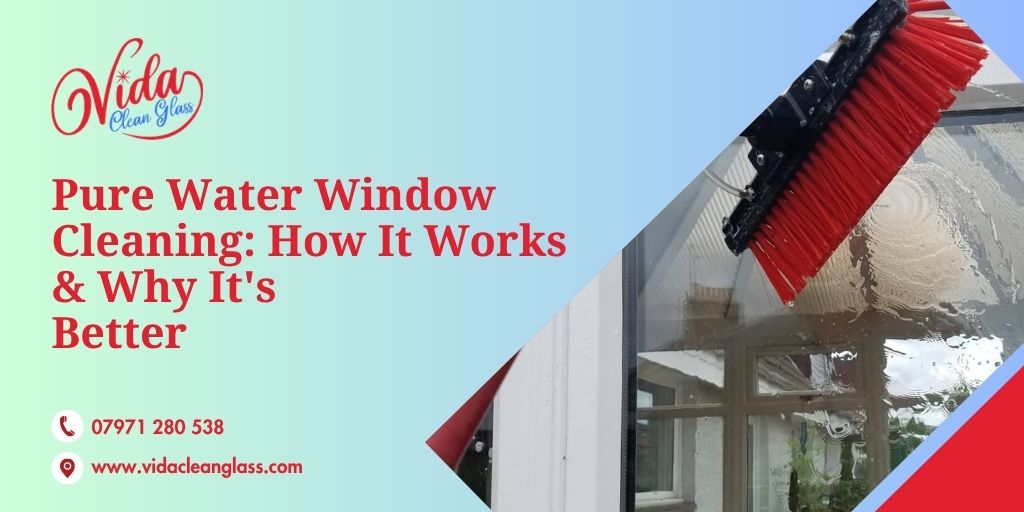
The process is simple to watch but clever in design. A trained operator works from the ground using a lightweight telescopic pole fitted with a soft brush head, with purified water fed through the centre.
Here is the basic sequence:
- Filtration. Tap water passes through filters that remove sediment, chlorine, and dissolved minerals. Most professional setups combine reverse osmosis and a de-ionising resin to “polish” the water to near-zero impurity.
- Agitation. The soft brush scrubs the glass, frames, and ledges, loosening dirt, pollen, and grime.
- Rinse. Purified water flushes everything away, including the dirt trapped in corners and seals that a cloth often misses.
- Air dry. The glass is left to dry naturally. With no minerals in the water, there is nothing to leave a mark, so it dries to a clear, spotless finish.
The poles used by professionals reach up to around 60 feet, which means upper-floor windows, conservatory roofs, and awkward glass can be cleaned safely without anyone leaving the ground.
Why is Purified Water Better Than Traditional Cleaning?
The traditional approach relies on detergent, a cloth or applicator, and a squeegee, usually with a ladder for anything above the ground floor. It can produce a good finish in skilled hands, but it has three real weaknesses: the soap leaves a thin film, the ladder creates a safety risk, and tap water spots the glass as it dries.
Purified water solves all three at once.
| Feature | Pure water method | Traditional method |
| Finish | Streak-free, dries on its own | Can streak; depends on technique |
| Chemicals | None | Detergents and solvents |
| Safety at height | Cleaned from the ground | Ladders, higher risk |
| How long it stays clean | Longer; no sticky soap film | Shorter; film attracts dust |
| Reach | Up to roughly 60 ft | Limited by ladder height |
| Frames and seals | Cleaned along with the glass | Often missed |
There is a hidden benefit too. Detergent leaves a microscopic sticky layer that acts like a magnet for fresh dust and pollen, so traditionally cleaned windows look dirty again sooner. Glass cleaned with purified water has nothing left on it. Hence, it stays clearer for longer between visits.
Is It Safe For Family, Pets, and Plants?
Yes. Because no detergents, solvents, or harsh chemicals are involved, there is nothing harmful running off onto your patio, flower beds, or driveway. This makes the eco-friendly approach genuinely safe around children, pets, and gardens, which is one of the main reasons households choose it.
It is also kinder to the building itself. Aggressive chemicals can damage seals, frames, and surrounding brickwork over time. Purified water cleans gently while still lifting stubborn grime, helping protect the lifespan of your windows.
How Often Should Windows be Cleaned With This Method?
For most UK homes, professional cleaning every two to three months keeps glass clear and protects the frames and seals. In Central London, the timing leans toward the more frequent end, because traffic film, pollution, and dust build up faster in the city.
A quick guide:
- Homes: every 2 to 3 months for a consistent, clear finish.
- Offices: every 2 to 3 months, or monthly on busy or polluted roads.
- Shops and restaurants: monthly or more often, since a spotless front directly affects how customers judge the business.
- Hotels and hospitality: monthly at minimum, as appearance is central to the guest experience.
Because the purified-water finish lasts longer, many customers find they can stretch the gap between cleans slightly compared with traditional methods, which helps balance the cost.
Why Professionals Use It For Residential and Commercial Work?
The reach-and-wash system scales beautifully. The same purified-water principle that gives a streak-free shine on a family home also delivers spotless results on a five-storey office block, a row of shopfronts, or a hotel facade. For residential and commercial window cleaning alike, it removes the ladder risk, cuts chemical use, and produces a consistent, professional finish that clients can rely on.
For business owner,s there is also a compliance angle. UK working-at-height guidance favours cleaning from the ground wherever reasonably practicable, and ground-based pole systems do exactly that, reducing risk and liability for property managers.
Frequently Asked Questions
- Does pure water window cleaning really leave no streaks?
Yes. Streaks are caused by minerals in ordinary water drying on the glass. Purified water contains virtually none, so it evaporates cleanly and leaves no marks, even when left to air dry.
2. Can windows be cleaned in the rain with this method?
In most cases, yes. Light rain is relatively clean, and because purified water dries spot-free, professionals can often work through drizzle without affecting the result. Heavy rain or high wind may delay a visit for safety.
3. Will it remove hard water stains and bird droppings?
It removes everyday dirt, traffic film, pollen, and most marks with ease. Severe, etched mineral stains that have bonded to the glass over years may need a separate specialist treatment first.
4. Is it suitable for older or period windows?
Yes. The soft brush and gentle, chemical-free rinse are well suited to sash, Georgian, and listed-building glass, where harsh products and scraping could cause damage.
5. How long will my windows stay clean afterwards?
Longer than with detergent-based cleaning, because there is no soap film to attract fresh dust; exact timing depends on your location, traffic, and weather.
6. Do you clean the frames and sills too?
Yes. The method rinses frames, ledges, and seals as part of the same pass, so the whole window looks fresh, not just the glass.
The Clear Choice for Spotless Windows!
Clean glass changes how a property feels. It lets in more natural light, lifts kerb appeal, and gives the right first impression to guests, customers, and clients. The purified-water approach gives you that result more safely, more sustainably, and for longer than the methods it replaced, whether you are caring for a family home or maintaining a busy commercial site.
If you want that flawless, streak-free window cleaning solution without the chemicals or the ladders, Vida Clean Glass is Central London’s trusted name, with 28 years of experience and fully insured, eco-trained teams behind every job. Life genuinely does look better through clean windows, so why settle for streaks? Get your free, no-obligation quote today and let us take your glass from dusty to dazzling.
Book your first clean with Vida Clean Glass and see the difference purified water makes!